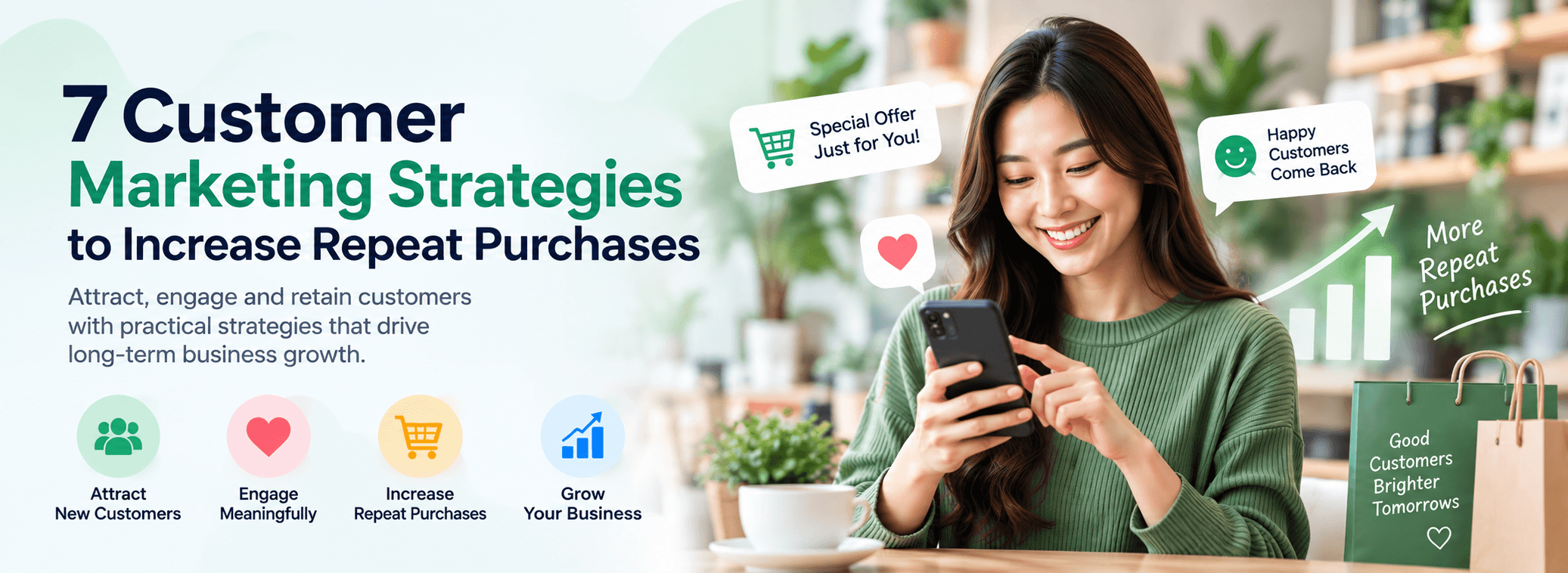
Acquiring new customers is important for every business, but sustainable growth does not come from acquisition alone. Businesses also need to encourage existing customers to return, purchase again and build a long-term relationship with the brand.
Customer marketing focuses on engaging people who have already interacted with your business. By understanding customer behaviour and delivering relevant experiences, businesses can create more opportunities for repeat purchases and increase customer value over time.
Why Customer Marketing Matters
Bringing in new customers can require significant marketing effort and investment. Once a customer has already purchased from your business, however, you have an opportunity to build on that existing relationship.
Effective customer marketing helps businesses stay connected with customers after their first purchase. Instead of constantly looking for new customers, businesses can also focus on encouraging existing customers to return.
Customer retention can become a powerful growth engine.
The goal is not simply to make one more sale. It is to build relationships that encourage customers to keep coming back.
7 Customer Marketing Strategies
Here are seven practical strategies that businesses can use to attract, engage and retain customers while increasing repeat purchases.
Know Your Customers
Understand your customers' behaviour, preferences and purchase history so you can create more relevant marketing campaigns and customer experiences.
Segment Your Customers
Group customers according to characteristics such as purchase frequency, spending level, interests, membership tier or recent activity.
Create Targeted Promotions
Offer personalised promotions that match your customers' interests and needs rather than relying on the same promotion for everyone.
Reactivate Inactive Customers
Identify customers who have not purchased or visited for a period of time and reach out with relevant offers or incentives to encourage them to return.
Reward Your Most Valuable Customers
Show appreciation to loyal customers with exclusive rewards, special offers, early access or additional membership benefits.
Personalise Your Marketing
Use customer information to deliver personalised messages, recommendations and offers that are relevant to each customer.
Measure and Improve
Track the performance of your campaigns, analyse customer behaviour and continuously improve your marketing strategy based on the results.
1. Know Your Customers
Effective customer marketing starts with understanding who your customers are.
Customer information can include purchase history, purchase frequency, spending behaviour, preferred products and engagement with previous campaigns.
The more you understand about your customers, the easier it becomes to create relevant marketing messages and offers.
Questions you can ask about your customers
- How frequently do they purchase?
- How much do they normally spend?
- What products or services do they prefer?
- When was their last purchase?
- Are they active or becoming inactive?
2. Segment Your Customers
Not every customer has the same needs or purchasing behaviour. Treating every customer in exactly the same way can make your marketing less effective.
Customer segmentation allows businesses to create different strategies for different customer groups.
- New customers
- Frequent customers
- High-value customers
- Inactive customers
- VIP or premium members
Each group can receive different messages, promotions and rewards based on their relationship with your business.
3. Create Targeted Promotions
A promotion becomes more effective when it is relevant to the customer receiving it.
Instead of sending the same promotion to every customer, businesses can use customer information to create targeted campaigns.
For example, customers who frequently purchase a particular product category could receive an offer related to that category.
Make the offer relevant
The objective of targeted marketing is not to send more promotions. It is to send better promotions to the right customers.
4. Reactivate Inactive Customers
Some customers naturally become inactive over time. They may have stopped visiting, purchasing or engaging with your business.
Rather than considering these customers lost, businesses can create reactivation campaigns designed specifically to encourage them to return.
A simple message, personalised offer or reward can provide customers with a reason to revisit your business.
5. Reward Your Most Valuable Customers
Loyal customers deserve to feel appreciated. A well-designed reward strategy can encourage customers to continue purchasing while strengthening their relationship with your brand.
Rewards can include:
- Exclusive discounts
- Points or stamps
- Birthday rewards
- Exclusive products or services
- VIP benefits
- Early access to promotions
6. Personalise Your Marketing
Customers are more likely to respond to marketing that is relevant to their interests and behaviour.
Personalisation can be as simple as addressing customers by name or as advanced as recommending products based on their previous purchases.
Businesses can also personalise campaigns based on customer activity, membership level, purchase frequency or preferred products.
7. Measure and Improve
Customer marketing should not be a one-time activity. Businesses need to measure results and continuously improve their campaigns.
Useful metrics can include:
- Repeat purchase rate
- Customer retention rate
- Customer lifetime value
- Campaign conversion rate
- Customer engagement
- Loyalty program participation
By reviewing these results, businesses can identify which campaigns work well and which areas need improvement.
Build a Continuous Customer Marketing Cycle
The seven strategies work best when they are connected rather than treated as separate activities.
A business can create a continuous cycle that starts with understanding customers and ends with measuring results.
Understand customers
Identify customer groups
Deliver relevant campaigns
Encourage repeat purchases
Conclusion
Effective customer marketing is about more than attracting new customers. Businesses can achieve sustainable growth by building stronger relationships with the customers they already have.
By understanding customer behaviour, segmenting customers, creating relevant promotions, reactivating inactive customers and rewarding loyal customers, businesses can create more opportunities for repeat purchases.
The key is to continuously measure the results and improve the customer experience based on what you learn.
Turn customers into long-term value.
Know your customers, engage them with relevant experiences, encourage them to return and build relationships that support long-term business growth.
Turn Customer Insights Into Growth
Augmigo helps businesses understand their customers, engage the right audience and build smarter customer growth strategies.
Talk to Us